
Stephen N. Haskell
Stephen H. Haskell was born in Oakham, Massachusetts, United States in the year 1833. At the age of twenty when he was preaching for First day Adventists, he read a tract on the sabbath and was consequently converted to Seventh Day Adventism in that same year, 1853. He did self supporting evangelist work until he was ordained in 1870 and was made the president of the New England Conference, a position he held for seventeen years. While serving as the president of the conference, Haskell was in charge of the first missionary group that was sent to start the work in Australia in 1885. He was also the president of California Conference three times; first from 1879 to 1887, then from 1891 to 1894 and lastly between 1908 and 1911. From the year 1884 to 1886, Haskell was the president of the Maine Conference.
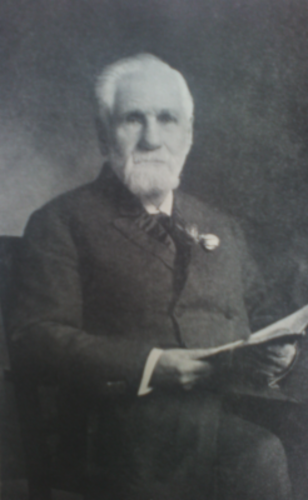
S. N Haskell on his 85th Birthday.
Elder Haskell made a world tour on behalf of missionary work where he was visiting missions checking the progress. He arrived in Africa at the peak of a real struggle by the missionaries to start up missions.The land in which Solusi mission would be built had just been acquired by A.T Robinson and Peter Wessels from the British Charter Company chaired by Cecil John Rhodes. He wrote to the brethren in America that they should not be surprised by the size of the farm that the company gifted the missionaries. He also acclaimed in the letter that the farms in Indiana and Iowa could not be compared in productivity to the 12000 acre land. In the letter that he addressed to the Foreign Mission Board, he highlighted the imminent struggle that the Wessels were about to encounter in taking care of the land. He noted that the missionaries were self supporting and some had even gone to open up mission work.
The question on Rhodes’ gift of a 12000 acre land for missionary work spread out among brethren in the States as wildfire. It was met with diverse and very sharp reactions even at the headquarters in Battle Creek. Church members, considering size of the land and other prospects, were in doubt if it was alright for the missionaries to accept the land as a gift. A meeting held on 13 November 1894 under the chairmanship of O. A Olsen sparked a series of discussions that went on for weeks with the Foreign Missions Board determined to resolve the issue on whether the land should be bought or accepted as a gift. At one time, the board agreed that the land was to be purchased.
This continued discussions prompted Elder Haskell to write a series of letters to the Foreign Missions Board explaining the situation to them as the natives in South Africa saw it. His explanation was that if any money was to be given, it was not to be handed to the charter company. Instead, it was to be compensated the Africans who had been dispossessed and displaced off from the land when the charter company arrived in the region. This however did not bar the board from carrying on with their intention of purchasing the land. F. M Wilcox, secretary of the board, wrote to W. C White to asking if it was violation of denominational principles to accept the land as a gift. The board, in waiting for White’s mother, E. G White to reply, got ready to buy the land, in which time Elder Haskell also wrote to W. C White if E. G White had any inspired counsel regarding the purchase of the land. In a meeting held on 17 March 1895,the board passed that the land would be bought but was never implemented. Earlier on 30th January, E. G White had written to S N Haskell stating; ‘ Dear Brother: You inquire with regard ti the propriety of receiving gifts from gentiles or the heathen. The question is not strange, but I would ask who is it that owns our world? … The Lord would move upon worldly men , even idolaters, to give of their abundance for the support of the work , if we would approach them wisely and give them an opportunity of doing those things which it is their privilege to do. What they would give, we should be privileged to receive.”
Elder Haskell went on to establish , and teach the bible at, Avolande College in Australia from 1896 to 1899 during which time E. G White was there in the country. Haskell and White were close friends in the ministries. Haskell received more letters from White than any other minister in the mission work. In her bedroom, the time of her death, the only non family member picture on the wall was of S. N Haskell who even preached at her funeral in 1915. Haskell died in 1922 at the age of 89 in Napa, California, United States.